.gif?width=320&height=80&name=7-logo-30years%20(1).gif "7-logo-30years (1)")

As we move into 2026, fleet management and ride‑sharing companies are pushing hard into Mobility‑as‑a‑Service (MaaS) offerings with hybrid, usage‑driven subscriptions, underpinned by sophisticated quote‑to‑cash, billing, and revenue recognition platforms, integrated within unified end-to-end environments, such as SAP Cloud ERP.
Key Drivers of Change
- Strong shift from one‑time fees to recurring, contract‑based services across mobility and telematics (e.g., “fleet‑as‑a‑service” bundles, such as hardware + software + analytics).
- Rapid growth of Mobility‑as‑a‑Service and connected‑fleet services, with B2B mobility being one of the fastest‑growing subscription segments and telematics projected to expand significantly through 2035.
- Movement away from flat, all‑you‑can‑eat subscriptions toward hybrid monetization, such as base subscriptions plus usage, events, or outcomes (miles, trips, assets, video‑AI events, etc.).
- More multi‑tier memberships and passes (e.g., ride passes, corporate plans, VIP tiers) to drive retention and average-revenue-per-user (ARPU); ride‑share players are expanding membership passes and “price‑lock” style offerings.
- Embedded value‑add services (AI video, safety, compliance, sustainability reporting) sold as recurring add‑ons on top of core platform fees.
- Greater focus on reducing churn and maximizing Customer Lifetime Value (CLV), by using margin analytics, beyond basic annual and monthly recurring revenue (ARR/MRR), to manage the complexity of these living subscription contracts.
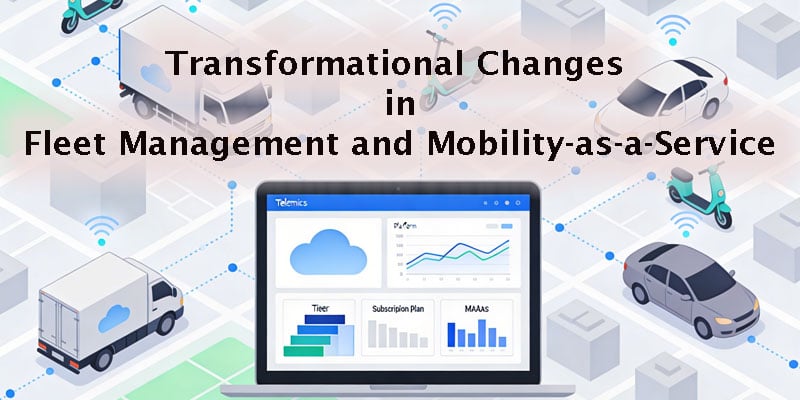
For example, a fleet platform could sell a base telematics subscription per vehicle, along with optional add-ons, such as video‑AI safety functionality or flexible billing for high‑volume data usage. Or ride‑share companies can move toward selling monthly ride passes with a variety of entertainment or communications options, and/or dynamic discounts and surcharges by time or zone.
Operational and technology trends
Subscription and MaaS models create continuous change (upgrades, downgrades, pauses, proration, usage spikes) that legacy ERPs and simple billing systems cannot handle efficiently.
Quote‑to‑cash and subscription lifecycle
Needed capabilities include:
- CPQ / subscription order management for complex bundles mixed term lengths, and usage tiers.
- Central product and pricing catalogs that support hybrid pricing and region‑specific rules.
- Automated contract lifecycle with full history for compliance and analytics.
- Integration between sales, service, billing, and finance so that changes flow through without manual work.
Usage, metering, and billing
To monetize telematics and ride data, platforms need:
- High‑volume metering of events with near‑real‑time responsiveness.
- Flexible subscription billing to support recurring charges, usage‑based fees, minimum commitments, and mid‑period changes.
- Dunning, collections, tax handling, and support for multiple legal entities and currencies for global fleets.
Revenue recognition and compliance
ASC 606 / IFRS 15 add extra complexity when contracts mix subscriptions, usage, and one‑time elements to address these key needs:
- Decoupling “billed” from “recognized” revenue, especially for variable consideration such as usage fees, which cannot be recognized until the usage occurs.
- Handling multi‑element contracts, allocating transaction price across performance obligations, and supporting time‑based, event‑based, and percentage‑of‑completion patterns.
- Robust subledger support for revenue accounting that feeds general ledger and supports audits and disclosures.
Analytics and AI
Organizations are increasingly using AI on top of subscription data to predict churn, optimize pricing, and identify upsell opportunities, especially in data‑rich telematics and ride‑sharing environments. Key AI innovation arenas include:
- Predictive maintenance as a subscription: Models use real‑time sensor and diagnostic data to forecast component failures, reducing unplanned breakdowns by up to roughly 40% and maintenance costs by around 20%, enabling fleets to pay recurring fees for guaranteed uptime and maintenance insights.
- AI video telematics and driver‑safety services: Camera+AI systems detect fatigue, distraction, tailgating, and harsh events, enabling providers to sell continuous monitoring, in‑cab coaching, and incident review as monthly per‑vehicle subscriptions.
- Route, fuel, and energy optimization: AI uses telematics plus historical patterns to optimize routing and driving behavior, with recurring “optimization” or “efficiency” packages that promise fuel and emissions reductions of as much as 15%.
New AI-enabled recurring revenue models and upsell opportunities
Platforms that reposition from hardware sales to AI‑centric services are seeing services/recurring revenue grow faster than product revenue; for example, one AI‑enabled fleet/IoT provider reported services revenue up about 11% year‑over‑year with services reaching roughly 80% of total revenue.
- Tiered AI feature bundles: Basic GPS + optional AI safety, predictive maintenance, theft prevention, fraud detection, and ESG/CO2 analytics, each priced as add‑on subscriptions.
- AI‑driven risk and insurance programs: Continuous risk scoring and claims evidence streams support usage‑based or safety‑linked insurance products and revenue‑sharing arrangements with insurers.
- AI “copilots” and workflow assistants: Fleet‑manager copilots and operations assistants are being positioned as recurring add-ons on top of core telematics.
AI‑enabled fleet‑management systems—especially cloud‑delivered—are a major growth driver, with the AI‑enabled fleet management market and broader fleet management market both projected to grow strongly at mid‑ to high‑teens compound annual growth rates (CAGRs) into the 2030s. In practice, fleets are paying every month not just to “see where vehicles are,” but for AI that keeps them running, safer, and cheaper to operate—expanding durable recurring revenue streams for fleet‑management providers.
How SAP solutions address these issues
SAP offers an extensive technology stack that fits well for fleet‑management and ride‑sharing subscription models, especially with SAP Cloud ERP, S/4HANA and its specialized billing/revenue components.
Core: SAP S/4HANA and Cloud ERP
- S/4HANA (on‑premise or cloud) provides financials, asset accounting, and contract‑based revenue recognition integration that are well suited for managing fleets as assets, as well as integrating recurring service revenue.
- SAP Cloud deployments enable faster rollout of new subscription offerings and easier integration with IoT platforms and external billing systems.
Subscription and usage billing
For complex, high‑volume mobility scenarios, SAP’s Billing and Revenue Innovation Management (BRIM) portfolio includes these key applications.
- Subscription Order Management to model and manage subscription and usage‑based offerings and their lifecycle.
- Convergent Invoicing and Convergent Charging to rate high‑volume usage events (e.g., telematics data, trips, tolls) and consolidate them on invoices.
- Finance and Contract Accounting (FI-CA) is a specialized high-volume sub-ledger for handling vast amounts of transactions, such as managing high-volume, automated accounts receivable.
- Integration to S/4HANA and Universal RevRec (URR) and Revenue Accounting and Reporting (RAR) so that rated events become revenue accounting items for compliant recognition.
This stack supports the hybrid models and high‑velocity metering that 2026 fleet and ride‑sharing businesses are adopting.
SAP and Bramasol Collaborate to Tailor Solutions for Fleet Management and MaaS
Working together, SAP and Bramasol enable fleet and Mobility‑as‑a‑Service providers to turn granular telematics and trip data into recurring revenue by linking real‑time usage metering with flexible pricing, billing, and revenue recognition in a unified, cloud‑based quote‑to‑cash stack. SAP Subscription Billing, SAP Convergent Charging, and SAP BRIM support complex mobility tariffs (per‑vehicle, per‑trip, per‑mile, time‑of‑day, zone‑based, add‑on safety services) and can rate individual usage events in real time,
In addition, Bramasol’s pre-built implementation accelerators and project management disciplines help fleet‑as‑a‑service players stand these new business models up quickly and integrate them seamlessly with SAP S/4HANA for invoicing and event‑based revenue recognition.
The combination of advanced solutions and industry-focused expertise, enable SAP and Bramasol to help mobility providers rapidly scale subscription and usage‑based offerings by unifying telematics data, sophisticated pricing models, and finance in an integrated SAP BRIM and SAP Subscription Billing landscape in SAP Cloud ERP.
This allows MaaS service providers to accurately rate each trip or vehicle‑event, support advanced pricing structures, and feed clean, auditable data into SAP S/4HANA for compliant, event‑driven revenue recognition and clear, easy‑to‑understand customer billing.